Made in the suede.
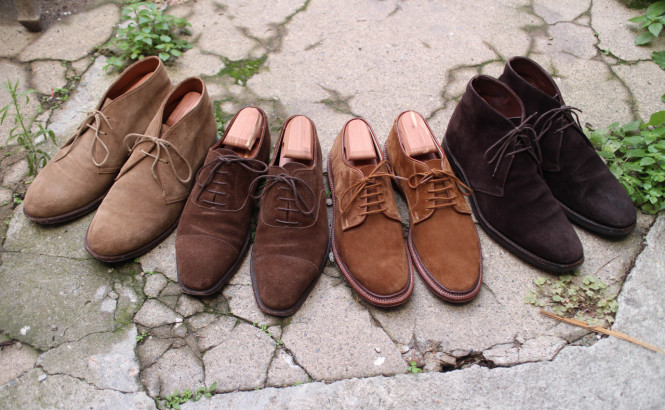
Suede captoes by Alfred Sargent for Sid Mashburn - easily one of my favorite eBay finds.
Business Casual Basics, Part III: Shoes
Previously: Part I, Part II. This is the third installment for my fellow white collar ballers.
If you’ve spent any time learning about men’s clothing (be it from family, friends, or the internet) you’ve probably heard a disproportional amount of talk about shoes. Shoes are a huge part of what dressing well is about (both in cost and importance), even though they take up a fairly small amount of space on your body. It can’t be stressed enough; shoes are often what separate the men from the boys, and business casual workplaces are notorious for bad shoe choices. A little bit of knowledge here will go a long way. Shoes are also the foundation of your outfit in stylistic and structural terms; if you buy well and take care of your purchases they will in turn keep you comfortable and stylish for decades.
1. Save up some money.
This one has the potential to get expensive. Accept the fact that high-quality shoes will be expensive if bought new, and can even be pricey when bought secondhand. Thrifting can be a good option here as well.
2. Learn the differences between “real shoes” and bad shoes.
High-quality shoes are expensive for many reasons, but the biggest two are material quality and construction. These qualities are much more important with shoes than they are in a shirt or pair of pants because shoes need to stand up to a tremendous amount of wear. Read Kiyoshi’s post and Put This On’s article to get a sense for what I’m talking about. If you buy a high-quality welted shoe that fits well and is well taken care of it will last for decades. Trust me.
Need some help finding out which brands can be trusted for high quality shoes and which can’t? I’ve included a short list at the bottom of this post, but my rule of thumb (toe?) is this: don’t buy shoes from any manufacturer that can’t tell you what last their shoes are made on. Any respectable shoe maker will have products on a range of last choices and will be able to tell you about them.
3. Understand the different styles and their applications.
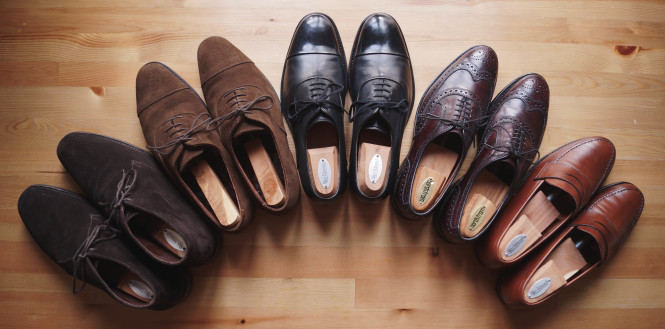
Ready for some shoe terminology? This should be enough to get you started.
WIWY: Classic
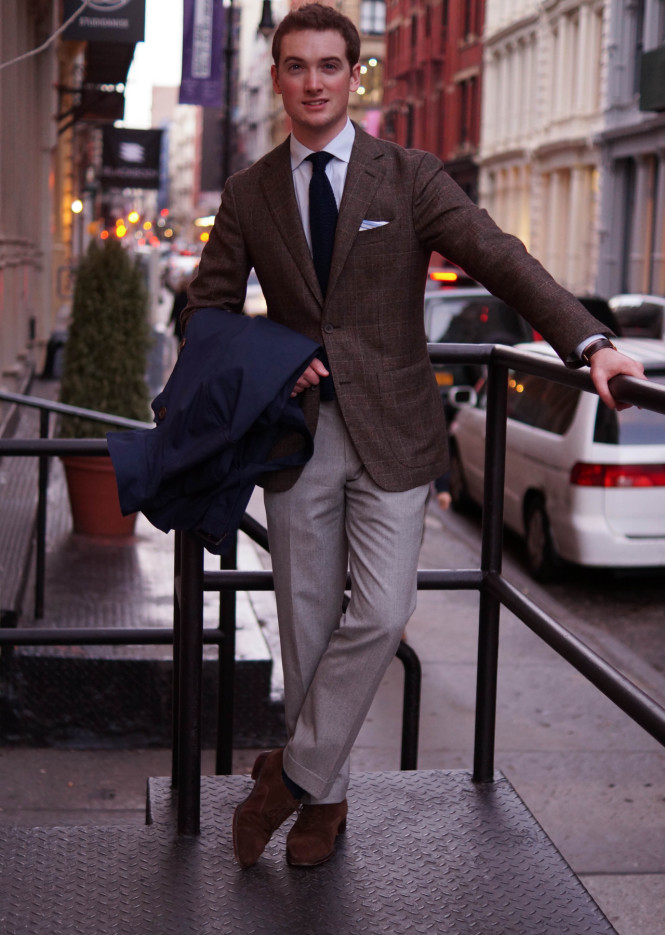
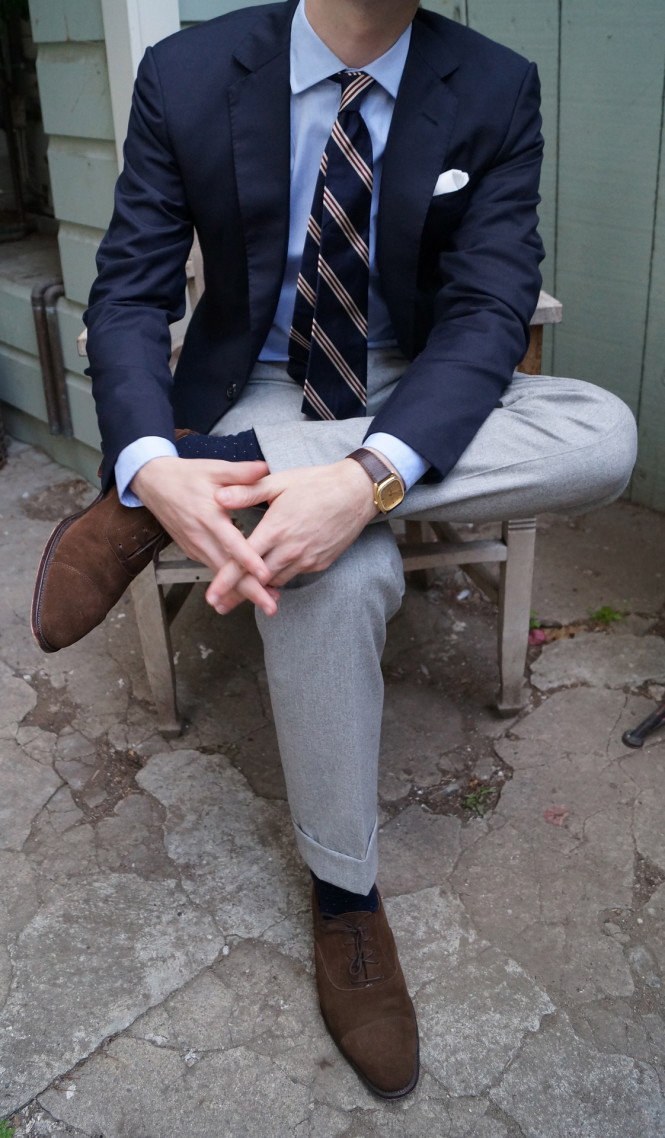
In the past year, the menswear community has really begun to feel the tides change from “slim is in” to “relaxed fit is right,” i.e. the classic “shape vs. drape” argument. I’m sure this will ultimately pass through the median “classic” point and head to the other side of the spectrum, as it always does. It is as if the menswear community is constantly trying to recover from the previous extreme, and in doing so enjoys a brief moment of classic proportions before heading into the opposite camp (or perhaps that is just my own personal experience). This pendulum behavior seems perfectly natural, and is quite nice in brief moments like these where both skinny and wide ties are passé, trouser legs are moderate in size, and the pleat/no pleat argument is a matter of taste, not some sort of ultimatum. However, it is in these instances that I feel most strongly that “classic” style can’t be unanimously described in inches of tie, lapel and trouser fabric. In my mind classic style is one part historical and one part what looks right on you. I’ve put together this look as my nod toward classic proportions, while acknowledging my own body type and personal preferences.
Some hard numbers: 3” jacket lapels, 3.25” tie, 8” trouser leg opening (slight break, classic rise, mild taper), classic-leaning (butt-covering) 29” jacket length. Nothing skinny here - except for me, of course.
Shirt - Proper Cloth | Tie - Vintage Polo RL (ebay) | Blazer - Part of a suit - Thick as Thieves | Flannel trousers - Howard Yount | Shoes: Sid Mashburn (ebay) | Pocket Square - The Tie Bar